
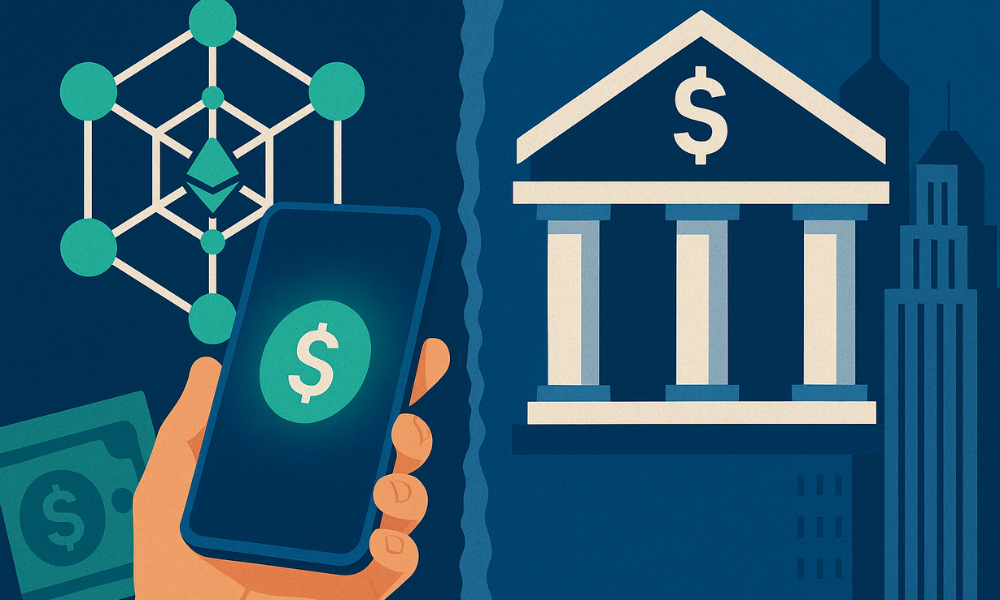

Will Decentralized Finance (DeFi) Disrupt Wall Street or Join It?
DeFi is poised to revolutionize the financial world by offering a direct and inclusive alternative to traditional banking systems. By cutting out intermediaries, it promises lower transaction fees and greater accessibility. However, the real intrigue lies in whether it will stand alone or blend with the established financial giants. To uncover the full picture, let’s dive deeper into what DeFi entails and its potential impact on the future of finance.
Understanding DeFi: The Basics
At its essence, DeFi represents a suite of financial services constructed on blockchain technology, primarily leveraging Ethereum. Unlike conventional finance, which is heavily dependent on intermediaries like banks and brokers, DeFi seeks to remove these middlemen. This allows users to engage with financial services directly through the use of smart contracts. Imagine being able to secure a loan or trade assets without ever setting foot in a bank; that’s the kind of paradigm shift DeFi aims to bring.
Key Features of DeFi
- Open Access: DeFi’s accessibility is one of its most compelling features. It doesn’t matter if you’re in a bustling city or a remote village; as long as you have internet access, you can participate. This democratizes finance, breaking down barriers that have long kept certain populations excluded from financial systems.
- Transparency: Every transaction made in DeFi is etched onto the blockchain. This not only ensures transparency but also holds every participant accountable. The ability to verify transactions publicly adds a layer of trust that is often missing in traditional systems.
- Programmable Money: Smart contracts are the backbone of DeFi, automating transactions and financial agreements. For instance, you can set up a smart contract to automatically transfer funds to your savings whenever your account balance exceeds a certain amount, removing the need for manual oversight.
- Yield Farming: This innovative concept allows users to earn interest on their crypto holdings by either lending them out or providing liquidity to decentralized exchanges. It’s akin to how traditional banks operate, but with potentially higher returns and more flexibility.
The Traditional Financial Landscape
To truly grasp DeFi’s potential, we must first navigate the well-trodden path of traditional finance. Wall Street has become synonymous with banking, trading, and investment management. It’s a realm dominated by established institutions and rigid regulatory frameworks. This world, with its skyscrapers and fast-paced trading floors, has long set the standard for global finance.
Key Players in Traditional Finance
- Investment Banks: These institutions are pivotal in facilitating capital raising and providing advisory services. They’re the architects behind major mergers and acquisitions, shaping the business landscape.
- Commercial Banks: Offering everything from deposit accounts to loans, they are the heartbeat of personal finance. These banks ensure our salaries are deposited, our bills are paid, and our mortgages are secured.
- Asset Managers: They handle investments for clients, ranging from mutual funds to hedge funds, ensuring that assets are allocated efficiently to maximize returns.
While these institutions offer stability and protection through regulations, they often suffer from inefficiencies and high costs. This structure, while safeguarding investors, can sometimes act as a barrier to innovation and accessibility.
Disruption or Integration? The Potential of DeFi
The burning question is whether DeFi will upend Wall Street or find a niche within it. Let’s delve into both possibilities to uncover a clearer picture.
Potential for Disruption
Advocates of DeFi believe its advantages can significantly challenge the status quo of traditional finance:
- Lower Costs: By eliminating intermediaries, DeFi dramatically reduces transaction fees. This could make financial services affordable for a broader audience, reshaping how we perceive banking costs.
- Greater Accessibility: DeFi platforms have the power to reach the unbanked, offering services to those who have been historically sidelined by traditional banks. This inclusivity can foster economic growth in underserved areas.
- Innovation: The pace at which new financial products are developed in DeFi is staggering. This rapid innovation could attract younger, tech-savvy individuals who are eager to explore financial opportunities beyond conventional methods.
Challenges to Disruption
However, it’s not all smooth sailing for DeFi, as it faces several hurdles:
- Regulatory Hurdles: Governments worldwide are grappling with how to regulate DeFi, and this uncertainty could stall its growth. The lack of clear rules can deter potential investors wary of legal repercussions.
- Security Risks: DeFi platforms are frequent targets for hacks and scams, casting doubt on the safety of user funds. High-profile breaches can erode trust and deter wider adoption.
- Volatility: The notorious price swings of the cryptocurrency market can significantly impact the stability of DeFi applications. This volatility can be a double-edged sword, offering both opportunity and risk.
Coexistence: A Hybrid Future
Instead of a full-blown revolution, a more plausible outcome is a future where DeFi and traditional finance not only coexist but also collaborate.
Examples of Integration
- Institutional Investment: Significant financial institutions are beginning to dip their toes into the waters of cryptocurrencies and DeFi projects. This interest is a testament to DeFi’s potential to enhance traditional finance.
- Partnerships: Some banks are already partnering with DeFi platforms, offering services like crypto lending and asset tokenization. These alliances indicate a willingness to blend the old with the new.
- Regulatory Frameworks: As regulations become clearer, there is likely to be a push towards hybrid models that merge the stability of traditional finance with the innovation of DeFi.
What Does This Mean for Investors?
For investors, understanding the interplay between DeFi and traditional finance is crucial. Here’s what you should keep in mind:
- Diversification: It’s wise to diversify your portfolio, balancing traditional assets with cryptocurrencies. This approach can provide a buffer against market fluctuations.
- Stay Informed: The financial landscape is evolving rapidly. Keeping abreast of trends and regulatory changes is essential to safeguard and grow your investments.
- Risk Management: Recognize the risks inherent in DeFi, such as volatility and security issues, and tailor your investment strategy accordingly.
Conclusion: Embrace the Change
In summary, while decentralized finance harbors the potential to disrupt Wall Street, a more realistic scenario is one where both systems coexist and complement each other. As DeFi continues to evolve, it opens new doors for investors and consumers. Whether you’re a veteran investor or just setting foot in the financial world, staying informed and adaptable will be your keys to success. So, are you ready to explore the world of decentralized finance? Dive in and discover the opportunities it presents!