
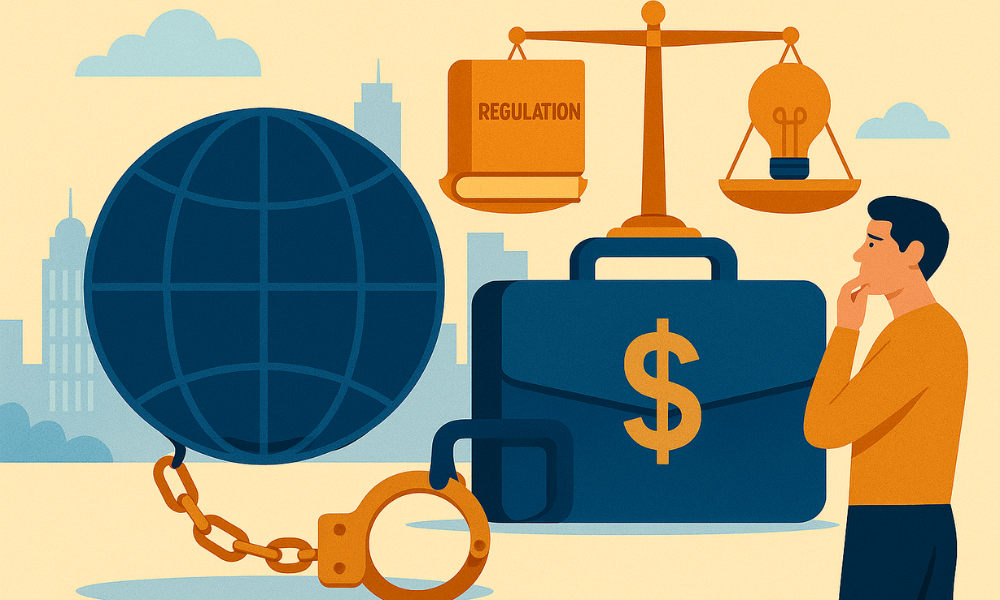

Are Global Financial Regulations Becoming Too Restrictive for Innovation?
Indeed, the tightening of global financial regulations is increasingly seen as a barrier to innovation in the financial sector. These regulations, while essential for protecting consumers and maintaining market stability, often impose constraints that can hinder the development of new technologies and ideas. To truly grasp the impact and the balance required, it’s vital to delve into the nuances of these regulations and their effect on innovation. Read on to explore this intricate landscape and how it shapes the future of finance.
Understanding Financial Regulations
Financial regulations are a series of rules and laws meticulously crafted to maintain the integrity of the financial system. These rules act as a safety net, ensuring that the markets operate fairly and transparently. For instance, the Dodd-Frank Act, enacted in response to the 2008 financial crisis, aims to reduce risks in the U.S. financial system. Similarly, the Basel III framework is an international set of standards designed to improve the regulation and risk management of banks worldwide. Such measures are pivotal in preventing the economic upheaval that can arise from financial misconduct or instability.
The Purpose of Financial Regulations
At their core, financial regulations are intended to achieve a few key objectives:
- Protect consumers from fraud and financial mismanagement. For example, stringent checks and transparency requirements help prevent scandals like those seen in the past decades.
- Ensure the stability of financial institutions, much like a sturdy foundation supports a skyscraper.
- Prevent systemic risks that could lead to economic downturns, akin to avoiding a domino effect in the financial markets.
- Promote fair competition within the financial sector, leveling the playing field for both newcomers and established players.
The Double-Edged Sword
While regulations are essential for instilling trust in the financial system, they can also act as a double-edged sword. It’s like trying to strike a balance between safety and freedom. On one hand, these regulations are necessary to prevent reckless financial behavior that could lead to crises. On the other hand, excessive regulations can stifle creativity, as seen when innovative startups struggle under the weight of compliance costs and bureaucratic hurdles. This tension raises the question: Are we safeguarding too much at the cost of progress?
The Rise of Fintech and Innovation
Over the past decade, fintech has revolutionized the financial landscape, bringing innovative solutions to money management and investment. Companies like PayPal have redefined digital payments, while Square has enabled small businesses to accept card payments effortlessly. Robinhood has democratized stock trading, making it accessible to a broader audience. These advancements provide consumers with more options, competitive pricing, and enhanced services, revolutionizing how we interact with money.
How Regulations Affect Fintech
Fintech companies often find themselves entangled in a complex regulatory web. These emerging businesses must navigate a multitude of compliance requirements, some of which can be prohibitively expensive. For example, acquiring the necessary licenses and meeting ongoing regulatory obligations can strain a startup’s resources, potentially diverting funds away from innovation. Moreover, the time-consuming nature of regulatory approvals can slow down the introduction of groundbreaking products, keeping them from reaching the market swiftly. Then there’s the issue of market entry barriers, where strict regulations can discourage new players from entering the field, ultimately reducing competition and stifling innovation.
Examples of Innovation Stifled by Regulation
There are several high-profile instances where regulations have posed challenges to innovation:
Cryptocurrency Regulations
Cryptocurrencies like Bitcoin have presented a new frontier in financial innovation, but they’ve been met with a patchwork of regulatory responses worldwide. Strict regulations in countries such as China and India have made it tough for crypto startups to gain traction. These restrictions can hinder the growth of an industry that holds the potential to revolutionize how we perceive and use money, offering decentralized solutions that bypass traditional banking systems.
Peer-to-Peer Lending
Peer-to-peer lending platforms have emerged as a promising alternative to traditional banking, enabling individuals to lend directly to others, often at lower interest rates. However, regulations designed to protect consumers and maintain financial stability can sometimes be overly restrictive, preventing these platforms from scaling effectively. Such regulatory hurdles limit consumers’ access to diverse borrowing options and can stifle the innovative potential of these platforms.
Finding a Balance
How can we strike the right balance between necessary regulation and innovation? Here are some strategies that could help:
- Regulatory Sandboxes: These offer a controlled environment where fintech companies can test new products with relaxed regulatory oversight, fostering innovation without compromising consumer safety.
- Adaptive Regulations: Developing flexible regulatory frameworks that evolve with new technologies could ensure that regulations remain relevant and effective. This approach prevents outdated rules from stifling new ideas.
- Stakeholder Collaboration: Engaging with industry leaders, innovators, and consumer advocates can help regulators understand the real-world impact of their decisions and adjust regulations to support innovation without sacrificing protection.
The Future of Financial Regulations
As we move forward, it’s crucial for regulators to acknowledge the importance of innovation in the financial sector. By adopting a collaborative approach that involves continuous dialogue between regulators, industry innovators, and consumers, we can craft more effective regulations. Such collaboration ensures consumer protection while also fostering a fertile ground for growth and innovation.
What Can Consumers Do?
Consumers play a vital role in this dynamic landscape. By staying informed about financial regulations and advocating for fair and reasonable policies, they can help shape a financial environment that balances protection with innovation. Active participation in discussions and voicing concerns can drive positive change, ensuring that the financial industry evolves to meet the needs of its users while maintaining a safe and stable market.
In conclusion, while financial regulations are crucial for safeguarding consumers and ensuring market stability, there is growing concern that they may be becoming too restrictive for innovation. Striking a balance between necessary oversight and the freedom to innovate is critical for the future of the financial industry. By promoting collaboration and adaptive regulations, we can create an environment that encourages innovation while still safeguarding consumer interests. So, stay informed, engage in discussions, and advocate for a financial landscape that values both safety and innovation!