
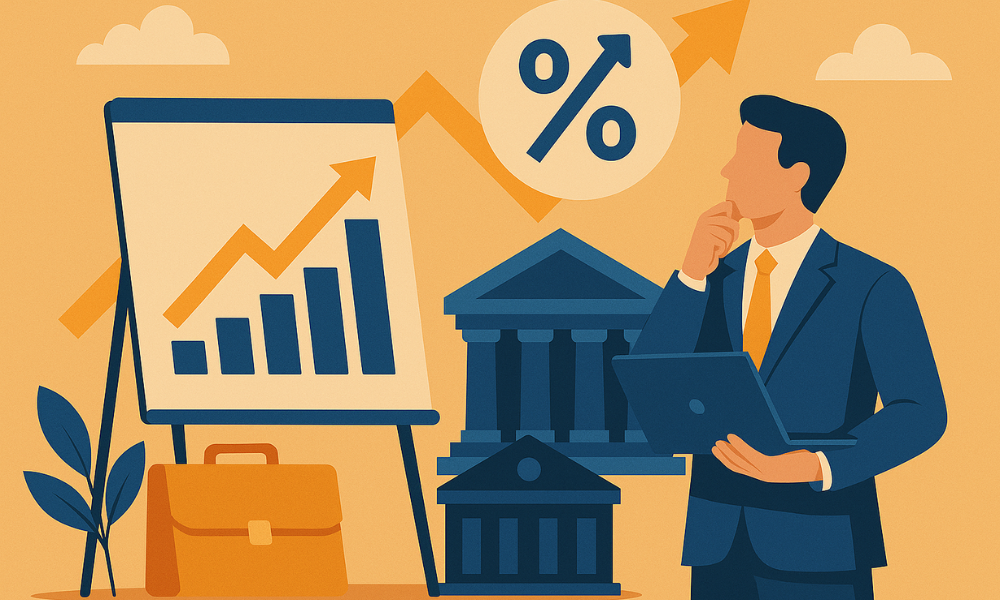

How are rising interest rates impacting corporate investment decisions?
Rising interest rates are compelling companies to reconsider their investment strategies by making borrowing more expensive and thus impacting their expansion and spending plans. As the cost of loans increases, businesses must weigh their growth ambitions against the higher financial burden. Understanding the ripple effects of these rate changes can reveal how they reshape corporate landscapes and consumer economics alike. Dive into the details to see how these shifts play out across different sectors.
The Basics of Interest Rates
To grasp how these changes affect corporate decisions, we first need a solid understanding of interest rates. Essentially, an interest rate is the price tag on borrowing money, expressed as a percentage of the loan amount. A rise in rates means loans become pricier, which can alter the financial calculus for businesses that depend on external funding. Whether a company is eyeing an expansion, tapping into new markets, or simply maintaining its operations, the cost of borrowing can be a pivotal factor. Imagine a tech startup poised to launch a groundbreaking product—suddenly, the increased interest on a crucial loan could change everything.
Why Do Interest Rates Rise?
The reasons behind rising interest rates are multifaceted, often reflecting the actions of central banks trying to steer the economy. For instance, when inflation heats up, central banks might step in to raise rates, aiming to cool down spending. This move can also occur during periods of rapid economic growth to prevent the economy from overheating. Moreover, global events, such as geopolitical tensions or shifts in international trade policies, can ripple through to influence local interest rates. Consider how a sudden geopolitical crisis might lead to a spike in oil prices, prompting central banks to act.
Impact on Corporate Investment Decisions
With the fundamentals in place, let’s delve into the core of how rising interest rates impact corporate investment decisions. Companies are navigating this terrain by reconsidering their financial strategies and priorities.
1. Higher Borrowing Costs
The immediate effect of increased interest rates is the heightened cost of borrowing. For corporations planning significant investments or expansions, this can be a game-changer. Higher costs may deter some companies from taking on debt, potentially leading to postponed expansion plans, reduced allocation for research and development, and more conservative hiring practices. Imagine a manufacturing firm delaying the launch of a new plant due to these financial constraints—it’s a common scenario in today’s economic climate.
2. Shift in Investment Strategies
As borrowing becomes more expensive, businesses often re-evaluate their investment approaches. Instead of plunging into high-risk ventures, they might shift focus to consolidating existing operations or seeking short-term returns. Companies may also bolster their cash reserves as a buffer against economic uncertainties. Picture a retailer opting to enhance its current store network rather than opening new outlets, prioritizing stability over expansion.
3. Impact on Stock Prices
Another dimension of rising interest rates is their effect on stock market dynamics. As the cost of capital goes up and corporate profits potentially shrink, investor behavior can shift. Investors may reduce their stock portfolios, gravitating toward dividend-paying stocks for a sense of security. Some may even reallocate to safer assets like bonds, viewing them as a more reliable refuge in turbulent times. This shift could lead to noticeable volatility in stock markets as investors recalibrate their strategies.
Industry-Specific Effects
The effects of rising interest rates vary across industries, influencing sectors in unique ways. Let’s take a closer look at how some industries are specifically impacted.
1. Real Estate
In the real estate sector, the ripple effects are often pronounced. Higher interest rates usually translate to increased mortgage rates, which can cool housing demand. As a result, real estate developers might delay launching new projects or pivot towards more affordable housing solutions. For instance, a luxury apartment project might be shelved in favor of budget-friendly units that appeal to a broader market segment.
2. Technology
Technology companies, which thrive on relentless innovation, face a dual-edged challenge. While some tech giants may scale back investments due to rising rates, others could explore alternative funding avenues, such as venture capital, or intensify cost-cutting measures. Imagine a tech startup forsaking a flashy marketing campaign to preserve capital for core product development.
3. Manufacturing
Manufacturing firms, heavily reliant on financing for machinery and equipment, feel these changes acutely. Higher interest rates can delay new technology purchases, potentially slowing down innovation and efficiency improvements. Consequently, manufacturers might pass on increased costs to consumers, leading to higher prices for goods. Consider a car manufacturer rethinking its latest model update due to the financial burden of higher loan costs.
Long-Term Implications
The long-term impact of rising interest rates can fundamentally reshape the business environment. Companies that adapt may find new opportunities, while those slower to adjust might face challenges. Key long-term effects include increased efficiency, as companies innovate to streamline operations and cut costs. The competitive landscape may also intensify, with businesses vying for limited investment opportunities. On the consumer front, higher corporate costs may eventually trickle down, impacting everything from product prices to job availability. In the end, the ability to navigate these changes can define a company’s success in a shifting economic landscape.
In summary, the rise in interest rates is prompting businesses to rethink their investment strategies and adapt to a more challenging financial environment. From modifying borrowing practices to re-evaluating market strategies, companies are navigating a complex web of economic factors. As consumers, staying informed about these shifts is crucial, as they can have tangible effects on personal finances and economic choices. Whether you’re considering investments, planning a home purchase, or simply keeping an eye on the economy, a clear understanding of interest rates and their implications will serve you well in the ever-evolving economic landscape.