
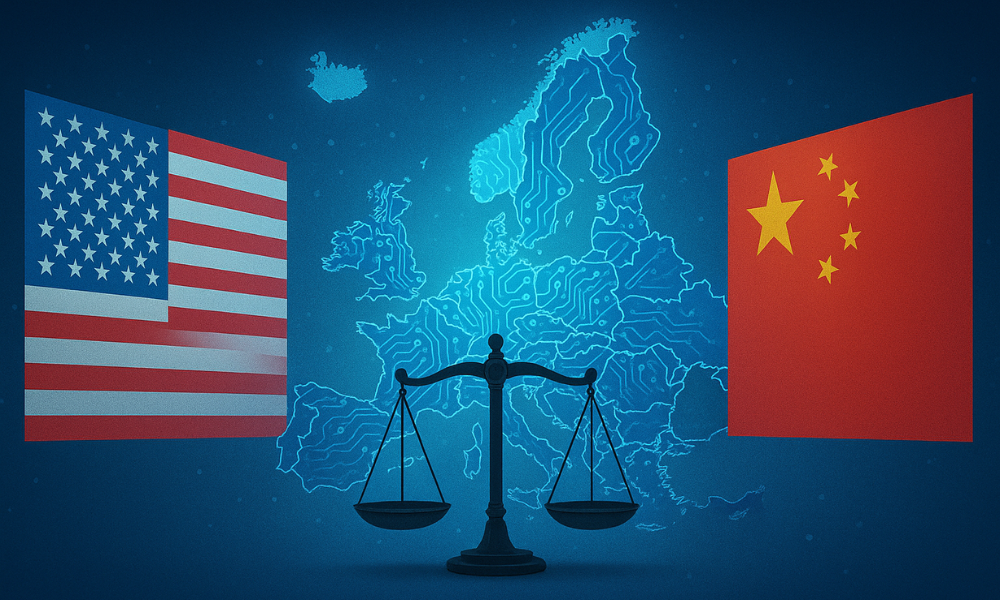

Can Europe establish an ethical model of AI against U.S. and Chinese giants?
Europe possesses the potential to lead in developing an ethical framework for AI, distinguishing itself from the approaches of tech giants like the U.S. and China. With its strong foundation in human rights and data protection, Europe is well-positioned to champion ethical AI. Dive into this article to explore how Europe can leverage its unique strengths amid the global AI race.
The Current AI Landscape
To understand Europe’s potential influence, it’s important to first grasp the existing AI environment. The United States and China are indisputably the frontrunners in AI development, propelled by massive investments and an unyielding drive towards innovation. Tech giants such as Google, Microsoft, and Alibaba are spearheading initiatives that continuously redefine the capabilities of AI. This fierce competition spurs technological breakthroughs but also ushers in a slew of ethical dilemmas. Concerns over data privacy breaches, inherent algorithmic biases, and the implications for job markets are becoming central issues. As these powerhouses relentlessly pursue progress, Europe must question at what ethical cost this advancement is achieved.
Europe’s Unique Position
Europe’s longstanding commitment to human rights and ethical norms sets it apart in the AI landscape. With the implementation of robust regulations like the General Data Protection Regulation (GDPR), Europe has made a name for itself as a vanguard in data privacy protection. This legacy offers Europe a distinct advantage, positioning it as a potential leader in cultivating ethical AI practices. While the U.S. and China may focus on swift technological gains, Europe’s approach can highlight its dedication to ethical standards, potentially influencing global practices.
Key Principles for Ethical AI
For Europe to establish a respected ethical model for AI, several fundamental principles can be embraced:
- Transparency: AI systems must operate transparently, elucidating how decisions are reached and ensuring users understand the rationale behind AI actions. This could be achieved through models that provide explainability without sacrificing functionality.
- Accountability: Clear accountability is essential for AI decisions, ensuring individuals or organizations can be held responsible. This accountability could prevent misuse and foster public trust in AI systems, which is crucial for widespread adoption.
- Fairness: Designing AI without bias is critical to ensure equitable treatment of all individuals. This involves meticulous testing and validation of AI models to detect and eliminate biases.
- Privacy: Protecting personal data and giving individuals control over their information is paramount. AI frameworks must embed privacy by design, ensuring data security at every stage.
- Inclusivity: Incorporating diverse perspectives in AI development is vital to ensure wide representation and address the needs of varied communities. This could be supported by inclusive research teams and public consultations.
Challenges Ahead
Despite Europe’s noble ambitions to lead in ethical AI, it faces several substantial challenges:
Regulatory Hurdles
Constructing a comprehensive regulatory framework is a complex undertaking. The European Union (EU) must deftly manage the challenge of harmonizing regulations across its diverse member states. This requires a delicate balance between fostering innovation and ensuring rigorous oversight. If executed well, Europe can maintain its technological edge without compromising on ethical standards, but missteps could stifle progress and innovation.
Global Competition
While the U.S. and China continue to pour resources into AI, Europe risks being left in the dust if it delays in implementing its ethical framework. The rapid pace at which AI technology evolves means that any regulatory hesitation might result in a significant competitive lag. It is imperative for Europe to act promptly to establish its ethical standards, ensuring they complement rather than constrain technological advancement.
Public Perception
The influence of public perception cannot be underestimated. Many may view stringent regulations as impediments to technological progress. Therefore, it is crucial to educate the public about the long-term benefits of adopting an ethical approach to AI. By highlighting the societal and individual benefits of ethical AI, Europe can foster public support, which is essential for the successful implementation and acceptance of these regulations.
Opportunities for Collaboration
To navigate these challenges, Europe can capitalize on collaboration opportunities:
Partnerships with Industry
Collaboration with tech companies, academic researchers, and various stakeholders is essential. By building partnerships, Europe can nurture an ecosystem where ethical AI practices are developed cooperatively. Such partnerships can yield innovative solutions that not only respect ethical standards but also propel technological advancements. For instance, joint ventures between universities and tech companies could drive research in ethical AI systems.
International Alliances
Europe has the opportunity to extend its reach beyond its borders by forming alliances with nations that share similar ethical priorities. By advocating for global standards in AI ethics, Europe can amplify its influence on the international stage. Collaborating with countries that share its values can bolster Europe’s position as a leader in ethical AI, potentially shaping global norms and practices.
Examples of Ethical AI in Europe
Europe is already pioneering several promising ethical AI initiatives:
- The European AI Alliance: This initiative serves as a platform for stakeholders to engage in discussions and develop ethical guidelines for AI, promoting a shared understanding of ethical challenges and solutions.
- AI4EU: This European project is dedicated to advancing AI research and innovation while keeping ethical considerations at the forefront. It encourages collaborations across disciplines to integrate ethical AI into real-world applications.
- Ethics Guidelines for Trustworthy AI: Published by the EU, these guidelines offer a comprehensive framework to ensure AI development respects fundamental rights and societal values.
The Path Forward
Europe stands at a pivotal moment in its AI journey, with the opportunity to spearhead a model that champions ethics without stifling innovation. By adhering to principles such as transparency, accountability, fairness, privacy, and inclusivity, Europe can set a global benchmark for responsible AI development. However, with this opportunity comes the challenge of addressing regulatory complexities, competing on a global scale, and shaping public perception. The success of Europe’s ethical AI initiative will depend significantly on its ability to forge collaborations with industry and international partners, ensuring that its ethical standards not only keep pace with global competitors but also lead the way in responsible AI development.
In conclusion, Europe has the potential to establish a leading ethical model of AI, setting itself apart from the U.S. and Chinese approaches. By leveraging its strengths and addressing challenges directly, Europe can not only match its competitors but also become a pioneer in the realm of responsible AI innovation. Now is the time for Europe to take decisive steps towards creating an ethical framework that places humanity at the heart of artificial intelligence advancements.