
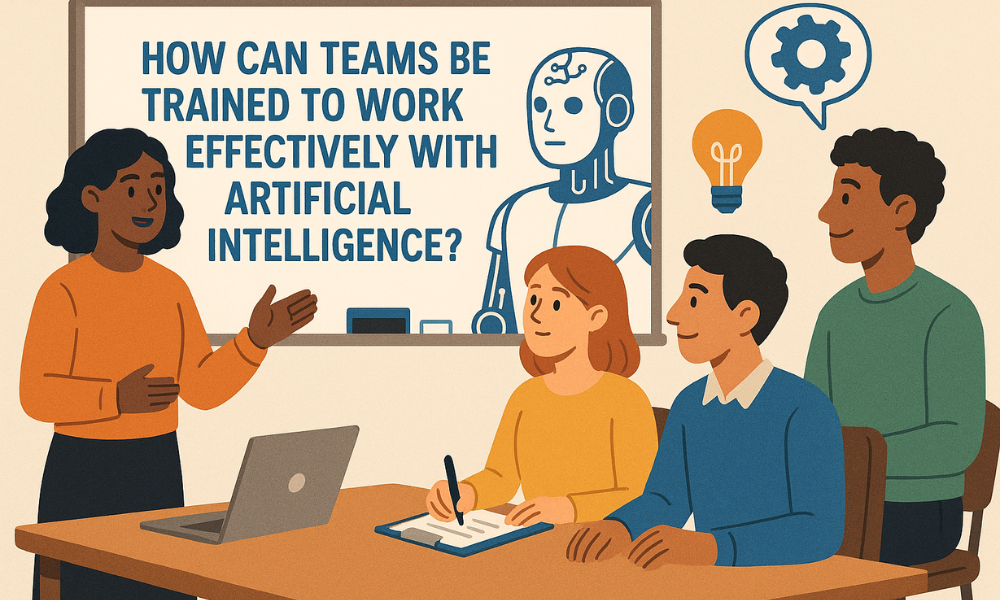

How can teams be trained to work effectively with artificial intelligence?
Training teams to collaborate effectively with artificial intelligence begins with a solid understanding of AI fundamentals, followed by hands-on experience and ongoing learning. This approach not only builds technical skills but also fosters an innovative and adaptable work culture. Dive into the details to discover how these elements come together to transform team capabilities.
Understanding AI: The First Step
Before teams can truly collaborate with AI, they need a foundational grasp of its workings. This doesn’t require every team member to become an AI specialist, but knowing the basics is non-negotiable. Consider, for instance, how self-driving cars use AI to make split-second decisions. Understanding these real-world applications can demystify AI. Moreover, exploring historical milestones like the development of IBM’s Watson can make the technology feel more tangible.
- What is AI? – At its core, AI involves machines or software that replicate human intelligence to perform tasks like speech recognition or data analysis.
- Types of AI: Knowing the difference between narrow AI, like a virtual assistant, and general AI, which remains largely theoretical, is important for setting realistic expectations.
- Machine Learning Basics: Grasping how algorithms learn from data can illuminate why AI sometimes struggles with unexpected scenarios, similar to how a new driver learns to handle complex traffic situations.
Training Programs: Building Knowledge and Skills
For teams to become proficient with AI, structured training is a must. Effective training programs take a multi-faceted approach, blending theory and practice to cultivate deep understanding and practical skills.
1. Workshops and Seminars
Workshops and seminars led by industry experts are invaluable. These interactive sessions provide insights that textbooks simply can’t. Imagine a workshop where participants use AI to solve a real business problem, like optimizing supply chain logistics. This hands-on approach not only educates but also inspires.
- The fundamentals of AI and machine learning: Think of this as the user manual for understanding AI’s potential.
- Real-world applications of AI in various industries: Examples include AI in healthcare for predictive diagnostics, or AI in retail for customer behavior analysis.
- Hands-on exercises with AI tools and platforms: Participants might experiment with building a simple chatbot, providing both challenge and excitement.
2. Online Courses and Certifications
Online learning platforms offer courses tailored to different expertise levels. For instance, beginner courses might cover AI’s impact on everyday life, while advanced programs delve into algorithm design. The flexibility of online learning allows employees to balance professional development with their work commitments.
- Basic AI and machine learning courses for beginners: Courses that demystify concepts like neural networks can ignite curiosity in novices.
- Advanced data science programs for more experienced employees: These programs often involve complex projects that mirror real-world challenges.
3. Collaborative Learning
Encouraging a culture where team members learn from each other enhances understanding and innovation. Imagine a mentorship scenario where a seasoned data scientist guides a team through a challenging AI project, sharing insights and sparking creativity.
- Regular discussion groups to explore AI-related topics: These can lead to breakthrough ideas or solutions to ongoing challenges.
- Mentorship programs where experienced staff can guide others: These relationships often lead to deeper knowledge and lasting professional bonds.
- Internal hackathons to solve problems using AI: These events foster innovation and can generate viable solutions that benefit the entire organization.
Practical Application: Hands-On Experience
After establishing a theoretical foundation, practical application is essential. Hands-on experience cements knowledge and builds confidence, much like how an apprenticeship supplements academic learning.
1. Identifying Use Cases
Identifying where AI can improve operations is crucial. Teams could explore automating routine tasks to free up time for strategic initiatives. Or, they might use AI to analyze customer feedback, uncovering insights that drive product development.
- Automating repetitive tasks: This not only boosts efficiency but also reduces the risk of human error.
- Analyzing large data sets for insights: AI can uncover patterns that are invisible to the naked eye, driving smarter business decisions.
- Enhancing customer experiences through personalized recommendations: Consider how Netflix’s recommendation engine enhances viewer satisfaction.
2. Experimentation with AI Tools
Hands-on experimentation with AI tools fosters familiarity and confidence. Teams might use TensorFlow for developing machine learning models, or explore chatbot frameworks to enhance customer service. The goal is to bridge the gap between theory and practice.
- Data analysis tools like TensorFlow and Pandas: These tools empower teams to extract meaningful insights from mountains of data.
- Chatbot frameworks for customer service: By developing chatbots, teams can streamline customer interactions and improve satisfaction.
- Predictive analytics software for market research: Tools that predict consumer behavior can be invaluable for marketing strategies.
3. Real-World Projects
Engaging teams in projects that utilize AI encourages them to apply their skills in meaningful ways. Whether it’s developing a chatbot for internal use or creating AI-driven marketing strategies, these projects provide a proving ground for new skills.
- Developing a chatbot for internal communications: This can streamline processes and improve efficiency.
- Creating a machine learning model to predict sales trends: Accurate predictions can drive sales strategies and revenue growth.
- Implementing AI-driven marketing strategies: Personalization powered by AI can significantly enhance customer engagement.
Encouraging a Positive Mindset Towards AI
Maintaining a positive outlook on AI’s integration into the workplace is critical. Teams should see AI as a partner rather than a threat. Discussing AI’s challenges transparently can alleviate fears and promote a balanced view.
- Highlight Success Stories: Share instances where AI has driven significant business transformations, like in logistics optimization or personalized customer experiences.
- Address Concerns: Open discussions about AI’s limitations, such as ethical considerations, can foster a more informed and balanced perspective.
- Promote Continuous Learning: Encourage teams to stay abreast of the latest AI trends, attending conferences or webinars to continually update their knowledge.
Building Interdisciplinary Teams
Diversity in team composition enhances creativity and problem-solving. By blending different expertise, organizations can tackle complex problems more effectively. Consider how data scientists, industry experts, and IT professionals each offer unique insights that enrich AI projects.
- Include Data Scientists: Their analytical skills are crucial for interpreting data and developing algorithms.
- Incorporate Domain Experts: These individuals provide industry-specific insights that guide AI applications and ensure relevance.
- Engage IT Professionals: Their role is pivotal in integrating AI systems securely and efficiently within existing infrastructures.
Measuring Success
To gauge the effectiveness of AI training, it’s essential to track specific metrics. These include evaluating employee engagement, productivity improvements, and the successful deployment of AI initiatives. By measure these outcomes, organizations can continually refine their training programs for maximum impact.
- Employee engagement and satisfaction with training programs: High engagement levels often correlate with successful learning outcomes.
- Improvements in productivity and efficiency: These metrics can highlight the direct benefits of AI integration.
- Successful implementation of AI projects and their outcomes: Real-world results are the ultimate test of training efficacy.
Training teams to work effectively with artificial intelligence is about more than just acquiring technical skills; it’s about nurturing a culture of collaboration, innovation, and perpetual learning. By understanding AI, engaging in practical applications, and building diverse teams, organizations can unlock the full potential of this transformative technology. Ready to embrace AI and elevate your team’s capabilities? Start today, and watch your organization thrive!