
Which Human Skills Will Be Most Valuable in the Age of AI?
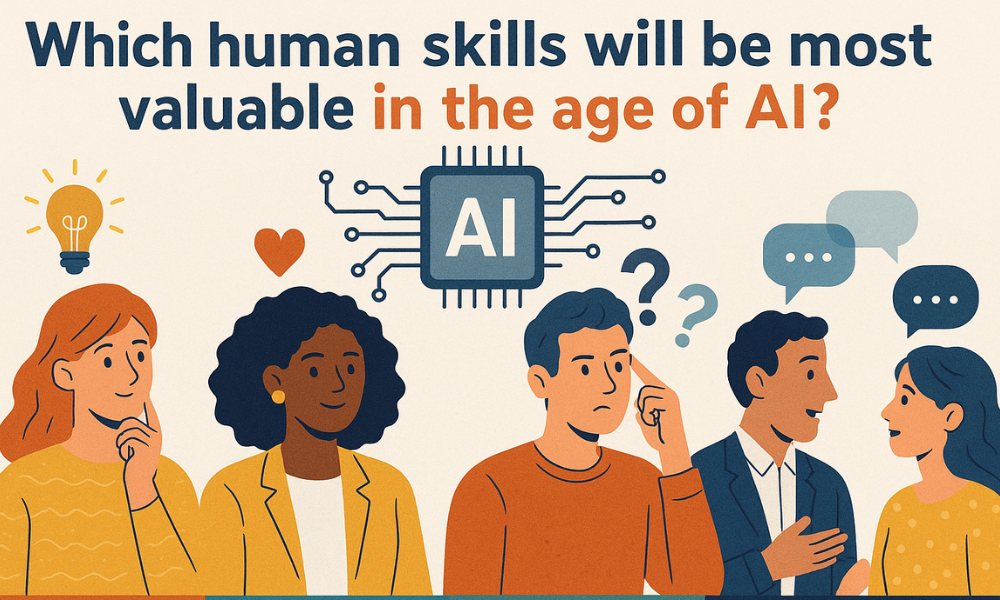
In the fast-evolving world dominated by artificial intelligence, it is clear that human skills like emotional intelligence, creativity, critical thinking, communication, collaboration, and lifelong learning will be invaluable. These are the skills that differentiate us from machines, enabling us to thrive alongside AI. To understand how these skills can be harnessed effectively, read on for a deeper dive into each one.
The Rise of AI: A Brief Overview
Artificial intelligence is revolutionizing industries ranging from healthcare to finance by enhancing efficiency and accuracy. For instance, AI-driven diagnostic tools in hospitals can now detect diseases faster than ever before. But what does this mean for the workforce? Many traditional jobs are transforming, and some are disappearing entirely. Therefore, it is more important than ever to hone skills that AI cannot easily imitate, ensuring our relevance in this new landscape.
Understanding Human-Centric Skills
Human-centric skills, also known as soft skills, are vital personal attributes that facilitate effective and harmonious interactions with others. In the era of AI, these skills are not just beneficial—they’re crucial. Imagine a team meeting where empathy and clear communication bridge the gap between diverse perspectives, leading to innovative solutions. Let’s delve into some of these indispensable skills.
1. Emotional Intelligence
Emotional intelligence (EI) encompasses recognizing, understanding, and managing our emotions while empathizing with others. Picture a manager who navigates a high-pressure project with calmness and understanding, rallying their team to achieve shared goals. In an age where data-driven tasks are machine-managed, EI shines as a distinctly human ability.
- Empathy: Grasping others’ emotions and viewpoints, which can transform workplace dynamics.
- Self-awareness: Understanding how your emotions impact your behavior and decisions.
- Relationship management: Cultivating and sustaining healthy, productive relationships is key.
With the increase in remote work and digital communication, the skill of emotionally connecting with peers is more critical than ever.
2. Creativity and Innovation
While AI can crunch data and generate insights, it doesn’t possess the innate human creativity required for innovation. Consider the advertising industry, where crafting a compelling narrative or a catchy jingle remains a uniquely human forte. Whether it’s brainstorming the next big marketing strategy or redesigning a product, creativity is a prized asset.
- Problem-solving: Tackling challenges with out-of-the-box thinking to discover effective solutions.
- Artistic expression: Channels like art, music, and writing thrive on human creativity.
- Adaptability: The ability to shift gears and innovate in response to changing circumstances.
By channeling your creativity, you place yourself at the forefront in any field you choose.
3. Critical Thinking
Critical thinking involves evaluating information and making reasoned decisions. In an era where misinformation can spread rapidly, the skill to discern credible data from noise is invaluable. Have you ever sifted through conflicting reports to arrive at a well-informed conclusion? That’s critical thinking at work.
- Analytical skills: Breaking down complex issues into understandable parts for better evaluation.
- Decision-making: Choosing wisely based on solid evidence and analysis.
- Questioning assumptions: Examining the validity of widely accepted truths and challenging the norm.
Employers consistently seek individuals who can think independently and make sound judgments.
4. Communication Skills
Effective communication is foundational in any profession. As AI automates more technical tasks, the ability to clearly convey ideas and persuade others becomes a key differentiator. Picture a successful presentation that captivates an audience—a testament to excellent communication.
- Verbal communication: Convey thoughts and ideas succinctly and compellingly.
- Written communication: Craft messages and reports that are engaging and informative.
- Active listening: Truly hearing and understanding others’ perspectives is essential for collaboration.
Strong communicators not only share information but also foster collaboration and innovation.
5. Collaboration and Teamwork
In increasingly diverse and global workplaces, the ability to collaborate effectively is paramount. While AI can assist in tasks, it cannot replace the human element in teamwork. Imagine successfully navigating a project with a multicultural team, each member contributing unique insights.
- Interpersonal skills: Building rapport and connecting with colleagues is essential.
- Cultural awareness: Appreciating and respecting diverse backgrounds enhances teamwork.
- Conflict resolution: Successfully resolving disagreements and finding common ground is key.
Being a reliable team player who collaborates well with others is a skill that will always be in demand.
6. Lifelong Learning
In a world where change is the only constant, the ability to learn and adapt is crucial. Lifelong learning involves embracing new experiences and continuously seeking knowledge. Picture the tech-savvy professional who constantly updates their skills, staying ahead of industry trends.
- Curiosity: A drive to learn and explore new ideas fuels personal growth.
- Flexibility: Adapting to new roles, technologies, and environments with ease.
- Self-motivation: Taking charge of your learning journey to achieve personal and professional goals.
Those who commit to lifelong learning are better equipped to navigate the challenges and seize the opportunities presented by AI advancements.
As we continue to embrace the age of AI, it becomes evident that while technology will keep advancing, the significance of human skills remains unchanged. Emotional intelligence, creativity, critical thinking, communication, collaboration, and lifelong learning are all essential skills that will help you thrive in this new environment.
Take a moment to evaluate your current skill set and think about how you can further develop these human-centric skills. Whether it’s through courses, workshops, or simply engaging with others, investing in your personal and professional growth will undoubtedly pay off. The future might be automated, but it’s the human touch that will make all the difference.