
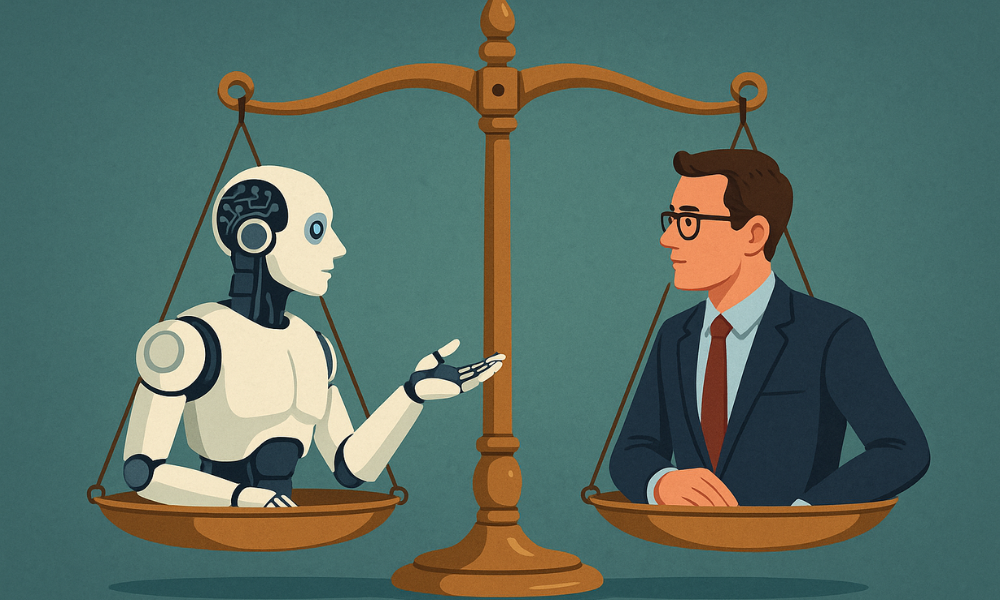

Will AI Replace Managers or Help Them Make Better Decisions?
Artificial Intelligence (AI) is unlikely to replace managers entirely; instead, it is primed to become a pivotal tool that enhances decision-making processes and operational efficiencies. By processing complex data and offering insights, AI can significantly augment managerial tasks, fostering a more informed leadership approach. For a deeper understanding of how AI can transform management, continue reading to explore its benefits and the challenges that accompany its integration.
Understanding AI in the Workplace
Before delving into AI’s impact on management roles, it’s crucial to grasp what AI entails. Essentially, AI encompasses computer systems designed to execute tasks traditionally requiring human intellect, such as learning from data, pattern recognition, and informed decision-making. Consider how AI manifests in the workplace: a customer service chatbot that operates around the clock, or advanced data analytics tools providing granular market insights.
Within businesses, AI takes on various forms, including:
- Chatbots for customer service, which can handle a multitude of queries simultaneously, offering quick and efficient responses.
- Data analytics tools for market analysis, capable of sifting through vast datasets to uncover critical trends.
- Automation software for repetitive tasks, which reduces human error and frees up employees for more complex tasks.
- Predictive algorithms for sales forecasting, helping companies anticipate market demands and adjust strategies accordingly.
The Role of Managers in a Changing Landscape
Historically, managers have been the linchpins of decision-making, guiding teams and organizations toward their objectives. However, with the advent of AI, this role is experiencing a transformation. AI is not here to supplant managers but to bolster their capabilities, offering a robust support system that complements human judgment.
AI as a Decision-Making Assistant
One of the most significant advantages AI offers in management is its capacity to process vast amounts of data rapidly, well beyond human capability. This empowers managers to:
- Make well-informed decisions grounded in real-time data, enabling swift responsiveness to market changes.
- Spot trends and patterns that may not be immediately apparent, an invaluable asset for strategic planning.
- Reduce the time-intensive nature of data analysis, allowing for quicker decision-making processes.
Consider a sales manager employing AI-driven analytics tools to predict sales trajectories. The AI can scrutinize historical sales data, current market conditions, and customer behavior, offering insights that pave the way for strategic decisions. This fusion of AI and human intelligence ensures that the nuanced understanding a manager brings to the table isn’t lost but rather amplified.
Enhancing Team Collaboration
AI can also significantly bolster team collaboration by refining communication and project management. AI-driven tools can help keep teams synchronized, assigning tasks and tracking progress with precision. This fosters an environment where efficiency is the norm, and managers can devote their energies to strategic development and nurturing team dynamics.
The Challenges of Integrating AI in Management
Despite AI’s promising benefits, its integration into management is not devoid of challenges. Organizations must navigate these potential pitfalls to ensure successful adoption of AI technologies.
Resistance to Change
One prominent hurdle is the resistance to change, with some employees fearing that AI might render their positions obsolete. This apprehension can impede the seamless adoption of AI tools. Managers need to effectively communicate the advantages of AI and reassure teams that AI is designed to assist, not replace them, fostering a culture of acceptance and collaboration.
Data Privacy Concerns
AI’s heavy reliance on data raises critical concerns around privacy and security. To leverage AI responsibly, organizations must adhere to data protection regulations and implement robust measures to safeguard sensitive information from breaches.
Dependence on Technology
There’s a risk that managers might become excessively dependent on AI for decision-making. While AI provides invaluable insights, it’s imperative that managers continue to apply their unique judgment and experience, ensuring that decisions are well-rounded and contextually appropriate.
The Future of Management with AI
As AI continues to advance, its role in management is poised to grow. Here are some predictions for the future:
- More Personalized Leadership: AI could enable managers to gain deeper insights into their team members, fostering more personalized and effective leadership styles.
- Focus on Strategic Roles: With AI taking over routine tasks, managers can allocate more time to strategic planning and innovation, driving organizational growth.
- Continuous Learning: AI can facilitate ongoing educational opportunities for managers, offering insights into emerging management techniques and industry trends, keeping them ahead of the curve.
So, will AI replace managers? The answer is a definitive no. Instead, AI stands to become a formidable ally, enhancing decision-making and streamlining operations. The key lies in recognizing AI as a tool for collaboration, not a substitute for human intuition and leadership.
Embracing AI in management requires finding the right balance between technological prowess and human insight. Managers who adeptly leverage AI will not only thrive in this evolving landscape but also steer their teams to unprecedented success. So, why not start exploring how AI can make your management practices more efficient today?